
Information Warfare and Your Social Media Activity
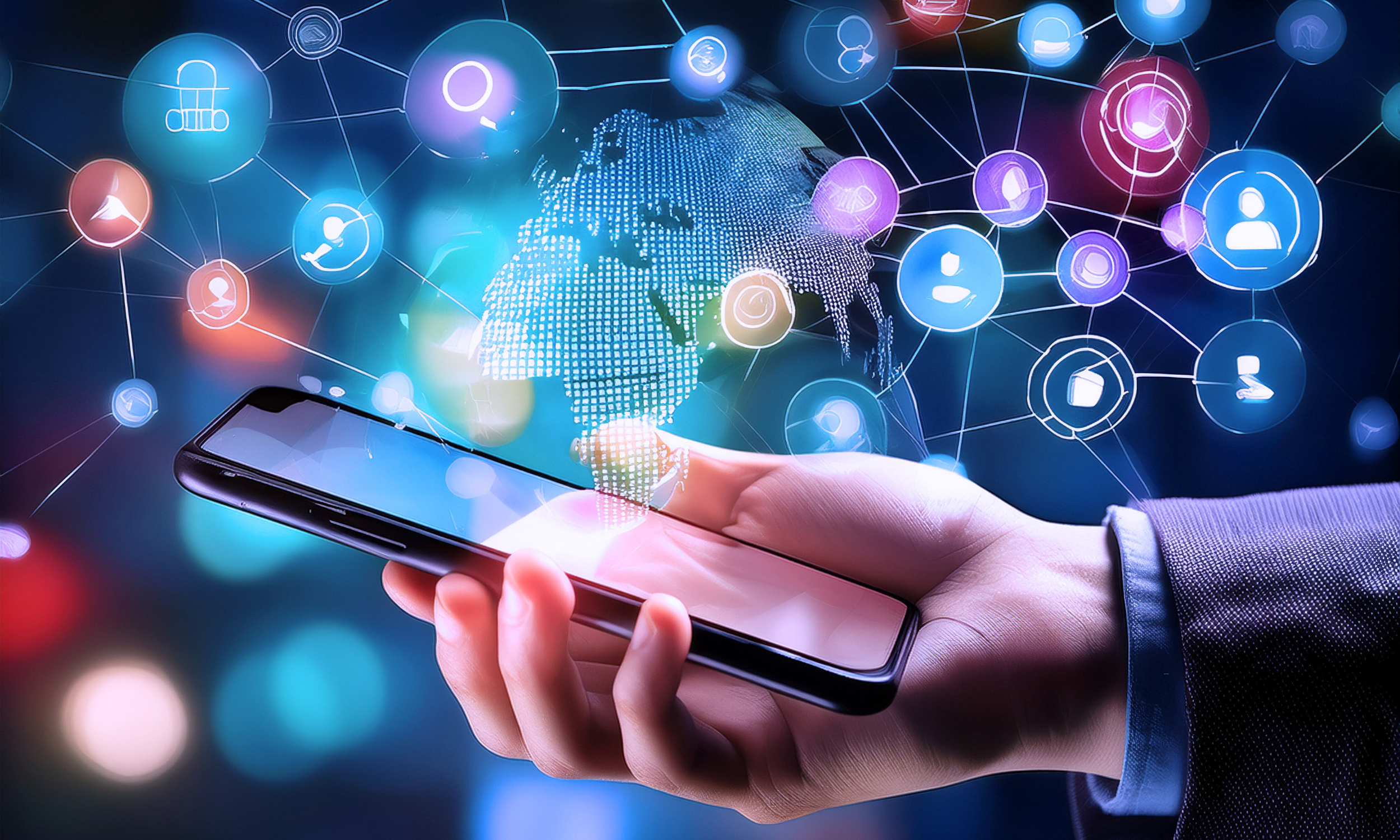
Social Media, Security, and the Digital Footprints We Leave Behind
The emergence of social media over the past two decades has radically changed how people communicate, socialize, network, shop, and consume information. What began as a way to connect with friends and share life updates has quietly evolved into a powerful data and intelligence environment. Social media disrupted many traditional media outlets, such as printed newspapers, local radio stations, and television channels, as people opted to spend more time scrolling online for entertainment, research, and connection.
One of the early social media platforms, Facebook, has emerged as a dominant platform, hosting over three billion users worldwide (CE Noticias Financieras 2023). Facebook’s approach to social networking prompted many other technology companies to offer similar options, including Pinterest, X (formerly known as Twitter), Snapchat, TikTok, and Instagram, which Facebook eventually purchased and brought under the broader Meta portfolio. Americans have increased their social media usage from 90 minutes per day in 2012 to over 140 minutes per day in 2025 (Statista 2025). That increase comes with a real opportunity cost. Time spent online is time not spent building local community ties, volunteering, investing in personal well-being, or engaging face-to-face with friends and family.
When Sharing Becomes a Security Risk
Today’s social media users document their lives in real time. They post relationship updates, information about where they live and work, details about family, finances, health matters, religious practices, and political views. Taken individually, these posts may seem harmless. Viewed collectively, they can reveal detailed patterns of behavior, beliefs, and routines.
For example, a fitness influencer who routinely posts workout videos on Instagram may geotag her gym, tag her favorite smoothie shop, and timestamp each post. From this information alone, a bad actor could reasonably predict where she will be and when, creating opportunities for theft, stalking, or property crime. While many users do not consciously intend to reveal this level of detail, features such as Instagram’s real-time map function have demonstrated how easily location data can be exposed (Nehrer 2025). Every image, post, or video discloses something, even when the user does not realize it.
When analyzed together, social media content can reveal information not only about individuals, but also about their families, social networks, and organizational affiliations. Social media analytics capabilities have expanded significantly, allowing for in-depth analysis of both individuals and groups (Zeng, Chen, Lusch, and Li 2010). This persistent and growing digital footprint is a defining feature of modern life in the post-2000s world.
From Digital Diary to Adversarial Manipulation
Foreign adversaries, cyber criminals, and terrorist organizations actively review American social media activity to collect information, identify vulnerabilities, and shape influence campaigns. Social media is not just a communication tool. It is an intelligence collection environment. An example of this was a Russian AI-generated video that falsely portrayed Ukrainian President Zelensky instructing citizens to surrender to Russian forces (BBC Monitoring 2022). This disinformation was designed to undermine morale, create confusion, and destabilize public confidence among Ukrainians and their allies.
Adversaries track sentiment expressed online, such as war fatigue, political polarization, or economic anxiety, and then craft information campaigns that exploit those fears (Dhai 2024). These campaigns are not created randomly. They are informed directly by what people post, like, and share. The widespread use of social media makes it easier than ever for adversaries to gather this type of intelligence and tailor weaponized narratives that resonate with specific audiences.
Why Digital Security Is a Personal Responsibility
Protecting personal information, including date of birth, home address, place of work, and personal beliefs, ultimately falls on the individual user. Unfortunately, social media platforms do not protect this information by default. Most platforms are designed to encourage sharing, visibility, and engagement, not privacy or security.
Intentional actions are required to limit digital exposure and reduce visibility to bad actors. Popular platforms provide extensive data on users who post and engage online (Phythian 2014), and many users remain unaware that their content holds value beyond social interaction. Understanding how user-generated content can be exploited is a foundational step in protecting personal security in the digital age.
Five Best Practices to Secure Your Digital Presence
1. Be aware of security settings on social media
When posting on social media, it is important to be aware of what default security and privacy settings are enabled. Many platforms are designed to maximize visibility and engagement by default, not privacy. For example, a video posted to an Instagram Story may, depending on one’s settings, disclose the physical location of the poster without them realizing it. Disabling geotagging features within each social media application is a best practice for supporting operational security (Ferdinando 2013).
Additionally, reviewing account visibility settings is critical. Setting an account to “Private” rather than “Public” limits who can view posts, photos, and stories. While public profiles may feel convenient or necessary for influencers or small businesses, they also increase exposure to unwanted surveillance. Users should periodically review platform updates, as settings can change without notice.
2. Do not connect with unknown or unverified accounts online
Not every account on social media represents a real person. Even if an account appears legitimate, with profile photos and shared content, that does not mean it is authentic. Fake accounts are frequently used for intelligence collection, social engineering, scams, and influence operations. A best practice is to avoid connecting with anyone you do not personally know or cannot verify through trusted means.
Verification can take several forms. Some platforms, such as LinkedIn, provide verified badges for accounts that complete identity verification. In other cases, verification may require a direct phone call, email, or offline confirmation. Limiting connections to people you know in real life or through trusted professional networks significantly reduces risk and narrows your digital exposure.
3. Be aware of what information is disclosed in each post
Seemingly harmless social media posts can reveal more information than intended. Photos from vacations, events, or daily routines may disclose where someone is, where they stayed, which businesses they frequent, and when they are away from home. This information can be exploited by criminals, scammers, or adversaries to impersonate the user or target their property.
The U.S. Army cautions service members and their families against posting travel information, especially in real time, due to the security risks involved (Ferdinando 2013). Behavior patterns, routines, and locations can often be inferred from a small number of posts. As a general rule, users should assume anything posted online could become public, even if privacy settings are enabled. Only post information you would be comfortable with anyone seeing.
4. Practice good cyber hygiene and cyber awareness
Social media accounts must be adequately secured using strong, unique passwords and two-factor authentication. Accounts that are poorly secured are far easier to compromise, even without advanced technical skills. In addition to account security, users must remain vigilant against scams commonly found on social media platforms, including fake marketplace listings, phishing attempts, romance scams, and fraudulent job postings.
Artificial intelligence and deepfake technologies have significantly increased the sophistication of these scams, making them harder to detect (Stokel-Walker 2024). Cyber awareness requires staying informed about common scam tactics and recognizing warning signs before engaging. Safe online behavior is not just about tools, but about informed decision-making.
5. Increase digital literacy related to social media use
Many social media users lack baseline digital literacy skills. They struggle to distinguish credible information from false or misleading content, misunderstand basic cybersecurity principles, and have difficulty identifying scams. This lack of digital literacy is particularly concerning given the sheer volume of time people spend on social media platforms.
Improving digital literacy helps users better understand how information is collected, shared, manipulated, and exploited online. Education in this area adds an important layer of protection and reduces susceptibility to disinformation and fraud (Mouncey and Ciobotaru 2025). While it would be ideal for digital literacy education to occur before individuals engage on social media, ongoing self-education remains critical for those already active online.
Conclusion
Staying safe on social media is a moving target. There is no single action that guarantees complete protection of one’s digital footprint. However, understanding how personal information can be collected, analyzed, and exploited is a powerful first step. Social media is likely to remain a dominant part of modern life, and users who engage online must do so with awareness and intent.
Not every connection, post, or platform interaction is safe or beneficial. Taking proactive steps to protect digital footprints helps safeguard individuals, families, and organizations from cyber criminals and foreign adversaries alike. In the digital age, security is not just a technical issue. It is a daily choice.
References:
BBC Monitoring, “Briefing: Zelensky Deepfake Shared on Social Media,” BBC Monitoring Former Soviet Union, March 17, 2022, https://www.proquest.com/wire-feeds/briefing-zelensky-deepfake-shared-on-social-media/docview/2640008567
CE Noticias Financieras. “Facebook Stronger Than Ever: It Is Already the Number One Network with 3 Billion Users.” CE Noticias Financieras, English ed., July 28, 2023. https://www.proquest.com/wire-feeds/facebook-stronger-than-ever-is-already-number-one/docview/2843570858
Dhai, A. “Elections, Pandemics and Information Disorder.” South African Medical Journal = Suid-Afrikaanse Tydskrif Vir Geneeskunde 114, no. 7 (2024): e2374. https://doi-org.ezproxy2.apus.edu/10.7196/
Ferdinando, Lisa. “Soldiers Must Consider OPSEC When Using Social Media.” Army News Service, May 17, 2013. https://www.army.mil/article/103528/Soldiers_must_consider_OPSEC_when_using_social_media
Mouncey, Emma, and Simona Ciobotaru. “Phishing Scams on Social Media: An Evaluation of Cyber Awareness Education on Impact and Effectiveness.” Journal of Economic Criminology 7 (2025). https://doi.org/10.1016/j.jeconc.2025.100125
Nehrer, Jennifer. 2025. “Instagram’s Map Feature Raises Privacy Concerns among Some Users.” NBC News, August 7, 2025. https://www.nbcnews.com/tech/tech-news/instagram-maps-feature-raises-privacy-concerns-some-users-rcna223706.
Phythian, Mark. 2014. “Chapter 8.” In Understanding the Intelligence Cycle. New York: Routledge. http://ezproxy.apus.edu/login?url=https://ebookcentral.proquest.com/lib/apus/detail.action?docID=1209543
Statista. “Daily Time Spent on Social Networking by Internet Users Worldwide from 2012 to 2025 (in Minutes).” Last modified February 2025. https://www.statista.com/statistics/433871/daily-social-media-usage-worldwide/
Stokel-Walker, Chris. "Deepfakes and Doctors: How People are being Fooled by Social Media Scams." BMJ : British Medical Journal (Online) 386 (Jul 17, 2024), http://ezproxy.apus.edu/login?qurl=https%3A%2F%2Fwww.proquest.com%2Fscholarly-journals%2Fdeepfakes-doctors-how-people-are-being-fooled%2Fdocview%2F3081863548%2Fse-2%3Faccountid%3D8289 https://doi.org/10.1136/bmj.q1319.
Zeng, Daniel, Hsinchun Chen, Robert Lusch, and Shu-Hsing Li. “Social Media Analytics and Intelligence.” IEEE Intelligent Systems 25, no. 6 (November/December 2010): 13–16. https://doi.org/10.1109/MIS.2010.123