

The Cyber Cowgirl™ Blog
Welcome to The Cyber Cowgirl™ Blog - Hannah’s archived collection of early morning thoughts related to cyber, defense, entrepreneurship, and professional development.
Join Hannah on this journey of discovery and discussion as we navigate the Digital Wild West together!

Is Technology Diminishing Our Cognitive Abilities?
Is technology diminishing our cognitive abilities? Research suggests our reliance on digital devices may be eroding focus, problem-solving, and social skills. As human interaction declines, so does our brain health. Discover why real-world connections are essential for mental clarity and how you can reclaim your cognitive strength.
Episode 60 - Todd Connor: Entrepreneur, Nonprofit Founder, and U.S. Navy Veteran
Todd Connor, Navy veteran and founder of Bunker Labs, breaks down what it takes to build mission-driven organizations that scale. Drawing on years of supporting veteran entrepreneurs, he shares candid insights on the realities of transitioning to civilian life, the pressures founders face, and the traits that separate those who succeed from those who stall. The conversation also explores his work with Veterans for All Voters and how the military-connected community can play a stabilizing role in a polarized environment.
Episode 59 - COL Jeremy Gwinn: Defense Technology, Economics of Warfare, and Reverse Innovation
COL Jeremy Gwinn offers a strategic lens on modern warfare, where economics, technology, and industrial capacity are as decisive as tactics on the battlefield. Drawing on experience from combat leadership to the Pentagon and now the Eisenhower School, he unpacks how nations resource and sustain war in an era of great power competition. The conversation explores the defense industrial base, emerging technologies, and the concept of reverse innovation, highlighting what leaders must understand to remain competitive in a rapidly evolving security environment.

Navigating Chaos With Clarity
Navigating chaos is a defining trait of successful professionals. Setbacks are inevitable, but they don’t have to be the end of the story. With the right mindset and strategies, challenges can become opportunities for growth. Learn how to adapt, innovate, and turn adversity into a stepping stone for success.
Episode 58 - General (Ret.) Paul E. Funk II: Talent, Training, and the Future of Warfighting
General (Ret.) Paul E. Funk II delivers a direct and experience-driven perspective on leading in high-stakes, “must-win” environments. From commanding a 72-nation coalition against ISIS to shaping the Army’s future through TRADOC, he breaks down the leadership principles behind building resilient, high-performing organizations. The conversation explores talent management, training, and decision-making under pressure, along with his concept of “positively intrusive” leadership and what it takes to prepare the next generation to succeed in complex, rapidly changing environments.

What Every Aspiring Entrepreneur Should Know
Starting a business isn’t about having the perfect idea—it’s about resilience, problem-solving, and relentless effort. When I first pursued business, I was told I had no future as an entrepreneur. Years later, I proved that professor wrong. I built a successful company with no money, no network, and no shortcuts—just hard work and adaptability. If you’re considering entrepreneurship, start where you are, invest in relationships, and hold yourself accountable. Success follows those who refuse to quit.
Episode 57 - Major (Ret.) Trisha Wyman: From PSYOPS to Business Intelligence and Research
Major (Ret.) Trisha Wyman brings a nuanced perspective on modern conflict, where influence, information, and technology shape outcomes as much as traditional force. Drawing on her experience in psychological operations and intelligence, she unpacks how disinformation, narrative control, and cognitive warfare are redefining the battlespace. The discussion also explores the challenges of operating in ambiguous environments, the intersection of data and decision-making, and how her work now bridges national security and the private sector.

Should We Fear Artificial Intelligence (AI)?
Artificial intelligence (AI) is rapidly transforming industries, raising questions about its impact on jobs, healthcare, and security. While AI offers powerful benefits, concerns arise about its potential misuse. Understanding how AI works — and ensuring responsible innovation — is key to harnessing its potential while minimizing risks. The future of AI depends on us.
Episode 56 - General Larry Spencer, USAF (Ret): Leadership, Warfighting, and Rising Through the Ranks
General Larry Spencer, USAF (Ret.), reflects on a 40-year career that took him from the enlisted ranks to Vice Chief of Staff of the Air Force, offering hard-earned insights on leadership, risk, and resilience. He discusses how warfare and decision-making have evolved across domains, what it takes to drive innovation inside massive institutions, and how early experiences shape leaders at the highest levels. The conversation also examines his continued mission supporting service members and what meaningful leadership looks like beyond uniform.
Episode 55 - Bob Ashley, LTG, USA (Ret.): Intelligence, Warfighting, and Developing the Next Generation of Leaders
LTG Bob Ashley, USA (Ret.), former Director of the Defense Intelligence Agency, offers a clear-eyed view into the realities of intelligence in modern warfare. Drawing on decades of experience across Iraq, Afghanistan, and senior strategic roles, he explains how intelligence truly supports decision-making, how it has evolved over years of conflict, and what outsiders often misunderstand about the discipline. The discussion also explores the impact of AI and open-source data, and what it takes to develop the next generation of intelligence leaders.
Episode 54 - Mike LeBlanc - Foundation Future Industries Co-Founder, U.S. Marine Corps Veteran, and Author
Mike LeBlanc, former Marine officer and defense tech founder, brings a grounded perspective on building at the intersection of warfighting and innovation. From leading Marines in combat against ISIS to scaling venture-backed robotics companies, he unpacks what it takes to operate under uncertainty, lead high-performing teams, and translate battlefield experience into entrepreneurial success. The conversation explores the rise of autonomous systems in warfare, the realities behind defense startups, and the leadership mindset required to navigate risk, ethics, and rapid technological change.
Episode 53 - LTG Robert Caslen, USA (Ret.): Character, Leadership, and “The Impossible Mission”
Drawing on more than four decades of service, LTG Robert Caslen, USA (Ret.), unpacks the strategic and human dimensions of war, leadership, and national decision-making. From his role in shaping the Global War on Terror strategy to leading West Point and later a major public university, he offers a rare perspective on how wars are fought, how they end, and what leaders must carry long after. The conversation examines the Iraq withdrawal, the resurgence of ISIS, and the enduring importance of character, accountability, and disciplined leadership in moments of uncertainty and public scrutiny.
Episode 52 - Bill Bender, Lt Gen USAF (Ret.) - Innovation, Risk, and Strategic Technology Leadership
In this episode of Tipping Spears, William Bender, retired Air Force three-star general and former USAF CIO, offers a candid look at leading large-scale transformation at the intersection of defense, technology, and strategy. Drawing on his experience overseeing a $17 billion IT portfolio and shaping foundational cyber and data leadership roles across the Air Force, Bender breaks down what it takes to modernize bureaucratic institutions in real time. From standing up early innovation efforts that helped pave the way for today’s Defense Innovation Unit to navigating the complexities of industry-government collaboration, he provides a clear-eyed assessment of the challenges and opportunities facing today’s national security leaders in an era defined by AI, cyber threats, and great power competition.

How Clear-Cutting Cyberspace is Destroying Our Ecosystem
The Internet was once a thriving digital wilderness, rich with opportunity, connection, and knowledge, but much like the reckless clear-cutting of forests, it is being stripped bare by unchecked technological expansion. Profiteers exploit personal data, misinformation spreads like invasive weeds, and once-vibrant online communities are reduced to barren landscapes dominated by corporate greed and harmful algorithms. Just as deforestation devastated ecosystems and displaced wildlife, our digital world is suffering from a similar fate—one that threatens privacy, mental health, and the very fabric of human connection. If we don’t adopt responsible conservation practices for technology, we may find ourselves in a world where the damage is irreversible, and the digital ecosystem we once relied on is nothing more than a wasteland.
Episode 51 - Major Geoff Ball, USMC - Leadership Development from the Tactical Edge
Major Geoff Ball shares lessons from Marine Corps infantry leadership, spanning combat deployments, company command, and professional military education. From crisis response missions in CENTCOM to service at Abbey Gate during the Afghanistan withdrawal, he reflects on moments that reshaped his understanding of responsibility and sacrifice. He discusses the habits that distinguish exceptional junior officers from merely competent ones. Major Ball also explains why ownership of professional growth is essential in a rapidly evolving operational environment. The conversation highlights his work developing future leaders and fostering professional discourse across the force.
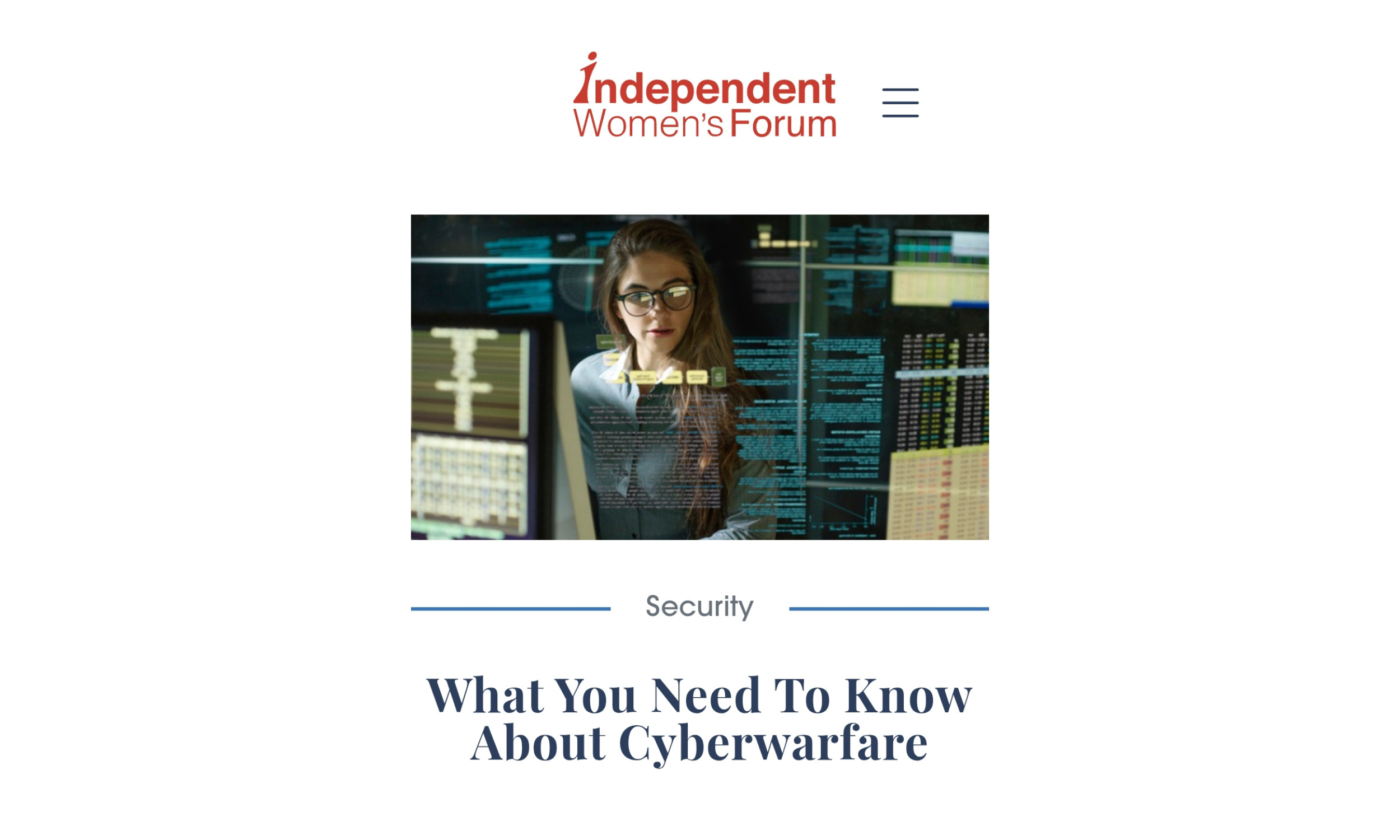
What You Need to Know About Cyberwarfare
Hannah Becker’s latest article unpacks the growing threat of cyberwarfare and its impact on national security. She highlights how hostile nations and terrorist organizations exploit technology to disrupt infrastructure, conduct espionage, and manipulate global stability. Becker’s sharp analysis warns of the increasing civilian risk in this digital battleground and calls for urgent action to strengthen cybersecurity defenses. She challenges policymakers and individuals alike to take cyber threats seriously and play an active role in securing our future.

Government Contracting is Like Farming
Government contracting is a lot like farming—it’s a long game, full of uncertainty, seasonal cycles, and the need for strong relationships. Success doesn’t happen overnight; it takes years of learning, sacrifice, and persistence to see results. Just like a farmer must plant and nurture crops long before the harvest, a government contractor must invest time and resources without immediate returns.

The UN: 500 Days of Hypocrisy
Hannah Becker’s latest article exposes the United Nations’ hypocrisy and failure in the wake of the October 7th terrorist attacks on Israel. She highlights how the UN has not only ignored the brutal crimes committed by Hamas but has also aligned itself with those responsible for mass murder, rape, and hostage-taking. Becker’s powerful analysis calls for accountability and challenges the UN to uphold the very human rights it was founded to protect.

The Realities of Being Married to Your Business Partner
Being married to your business partner is a unique experience that blends personal and professional life in ways most people can’t imagine. It magnifies every aspect of your relationship—both the strengths and the challenges—acting as a truth serum for compatibility, communication, and resilience. Entrepreneurship with your spouse pushes both your relationship and business skills to the limit, demanding adaptability, trust, and a shared vision for success.

Mis/Disinformation: The Skew of Information and Its Impacts on You
In their latest Signal article, Mis/Disinformation: The Skew of Information and Its Impacts on You, Hannah Becker and Maj. Trisha E. Wyman, USA (Ret.), explore the far-reaching consequences of false information in today’s hyperconnected world. They examine how mis/disinformation extends beyond politics, influencing individual decision-making, organizational security, and even national stability. Drawing on historical and modern examples—from Benjamin Franklin’s wartime tactics to AI-generated deepfake scams—they highlight the evolving nature of information warfare. Becker and Wyman emphasize how emotional manipulation and cognitive biases make people susceptible to false narratives, often without realizing it. To counter this growing cyber threat, they advocate for digital literacy, critical thinking, and verifying sources before accepting information as truth. Their insights serve as a timely reminder that safeguarding the integrity of information requires vigilance and deliberate decision-making.