
Wading Through the AI Slop
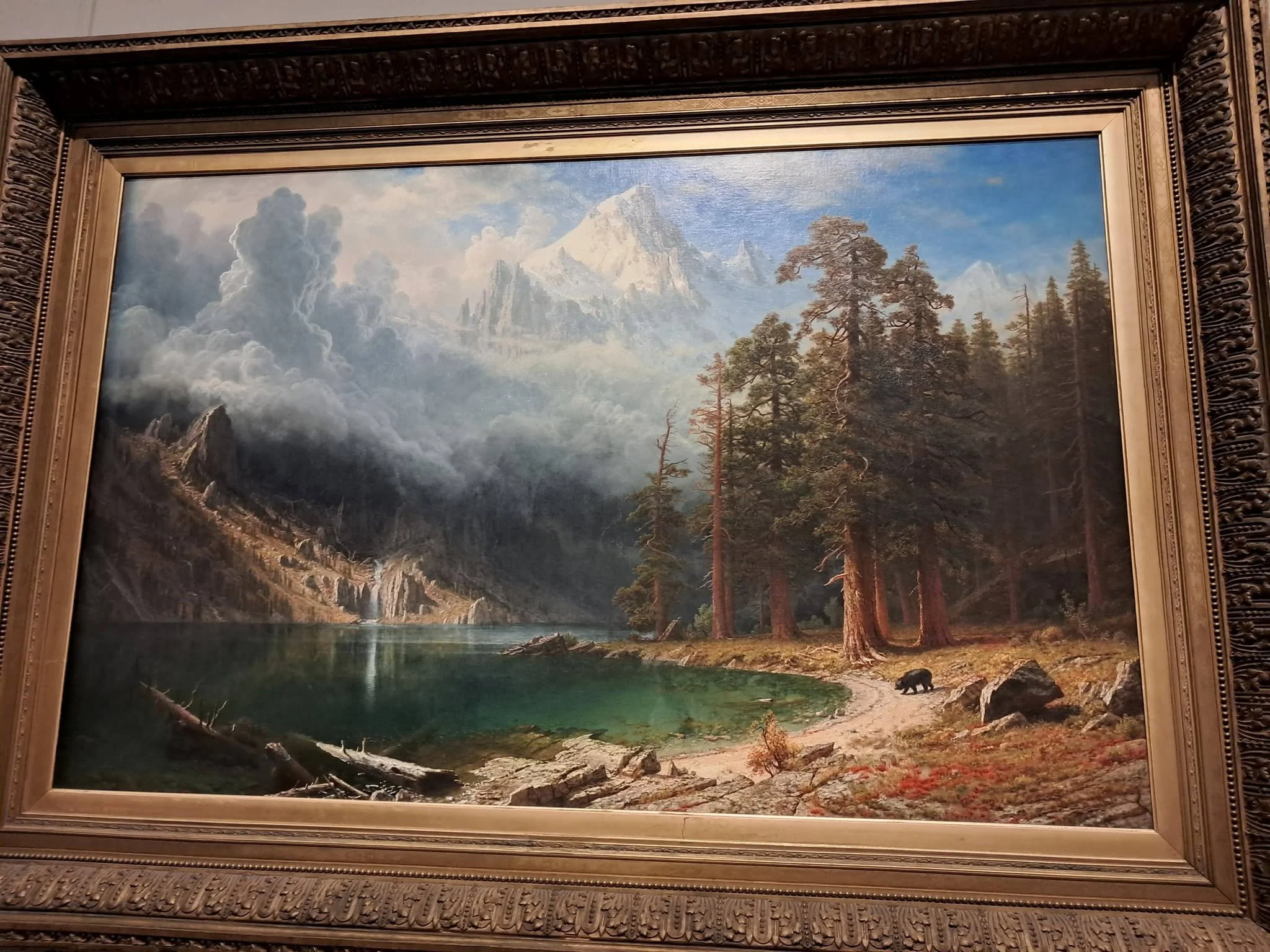
An Albert Bierstadt original that I absolutely adore.
Remember when a well-written poem moved you to tears?
When you heard a song on the radio that spoke right to your heart?
When a surprising email from a lifelong friend found its way into your inbox?
When a heartfelt speech spurred you to step up, be better, and take action?
Such was the world before AI slop. Everywhere I go, AI-generated nonsense saturates my existence. Classrooms are filled with students who couldn’t write an original paper if their life depended on it. Work correspondence is generic, sterile, grammatically correct jibber-jabber. The last three fiction books I picked up to take to the beach all sounded exactly the same - like a soulless LLM attempted to describe a passionate love affair of which it has no actual concept.
Sharing experiences through the written word, storytelling, and song has been a part of human experience for thousands of years. Chances are, you follow some form of a religious practice that was outlined eons before you came into existence. You probably have a few comedic and tragic family stories that were entrusted into your care, of which to pass down to the next generation. It's likely that some message from some other human has at some point stirred your soul and changed the trajectory of your life. I know it has mine.
Coming up in a pre-AI era, we had to engage our brains, think creatively and solve problems. We had no LLM to type questions into; instead, we had to get to know mentors, schedule times to chat, and make pre-meeting notes. There was no place to outline a draft or do research - we had to pull from our varied experiences, insights, and networks for inspiration and direction. Learning was hard. Nothing was automatically catered to our learning style, schedule, or interests. We devoured difficult-to-understand books, sat through three-hour lectures, and hand-wrote notes and flashcards. Writing a thesis by checking out printed journal articles at the college library was our generation’s version of walking to school in three feet of snow uphill both ways.
But there was something learned in that process of pain and discomfort. The struggle prompted a million little decisions that had to be made, required collaboration with thousands of other people, and forced us to correct hundreds of mistakes made along the way. AI’s easy-to-access, on-demand generation of information removes all of that knowledge-shaping inconvenience. And now, we as humans can opt to avoid the difficult parts of idea generation.
We can outsource email writing to AI chatbots who sound like some creepy Zombie version of who a computer thinks we are.
We can forgo the painstaking process of reading through journal article after journal article to dive deeper into a subject, and just have AI generate a list of references supporting a specific topic.
We can fail to engage our brains for figuring out the challenges of life, which we are here to address, and shrug off to AI for temperate solutions that lack any real impact, like my grandmother’s watered-down muscadine wine - not enough bite to make your cheeks flush.
Or we can recognize the slew of AI slop that’s circulating through every aspect of our world - from online cooking forums to the latest parenting book - and figure out how to find the genuine pearls of wisdom in our society.
Here are a few things I’m doing:
Listen to authentic voices. I find thought leaders I respect and trust, and I follow their content for continuing education. If you don’t know where to start, I host a podcast that’s 100% authentic human discourse - check it out on YouTube.
Practice writing. I journal every day about life, work, the panic thoughts that hit me at 2 AM. We must maintain the skills needed to articulate our original thoughts onto a page. Offloading so much of our written work to AI leaves this aspect of our being at risk of atrophy.
Read and research regularly. Pick up books from reputable authors and dig deep when it comes to research. Don’t take just one person’s word for it - devour counter ideas and intentionally challenge your own assumptions.
Keep talking. Monitor how much of your communication is electronic (text, DMs, emails, etc.), and make an intentional effort to reduce it by at least 20% through talking - phone calls, video chats, lunches with friends and colleagues.
Don’t let AI be your first go-to. Before starting a take, do the legwork yourself. Brainstorm yourself. Write a draft yourself. Identify key gaps and areas that are lacking. Then consult AI - not before. It’s supposed to be an ancillary tool - not a brain replacement.
Screw efficiency and embrace struggle. When everything is easy, we learn nothing. A rich and full life is supposed to be hard. It’s through the friction and pressure and stress that we gain new skills, learn new things, and expand our own horizon. AI’s offering is extreme efficiency, but such convenience is coming at a cognitive price of which you should be wary of exchanging.
AI slop is everywhere. Even the trusted news sources of which I’ve read over my morning coffee for the past 20 years are starting to lose their distinctly human insight and sounding more and more like a well-trained chatbot spearheaded the intro, body, and conclusion. Oh, what I would give to read a truly impassioned, error-ridden manifesto that succeeds at capturing an element of the human struggle!
Thanks to the proliferation of a new technology with little to no guardrails, we are losing our ability to connect, share, and enlighten as our predecessors have done for thousands of years. We wanted convenience over consciousness, and half-baked answers over mystical encounters with a complicated, judgmental divine. My fear is that people will tire of wading through all the AI slop that bombards us day after day, and will forgo the quest toward truth that has guided many an inquirer seeking truth and meaning in an uncertain world. A self-imposed Dark Ages in response to all the LLM-generated craziness. Or perhaps, we shall simply become more selective in where we consume our information, and will end up paying a premium for AI-free content. While the printing press revolutionized humanity through the ability to distribute information at a wider scale, AI is having a similar impact, but in the opposite direction. The next few years of attempting to apply this emerging technology to our society in ways that do more good than harm will reveal the true impact of AI for generations to come.
Click here to read more ramblings on how AI is impacting a very-human world.